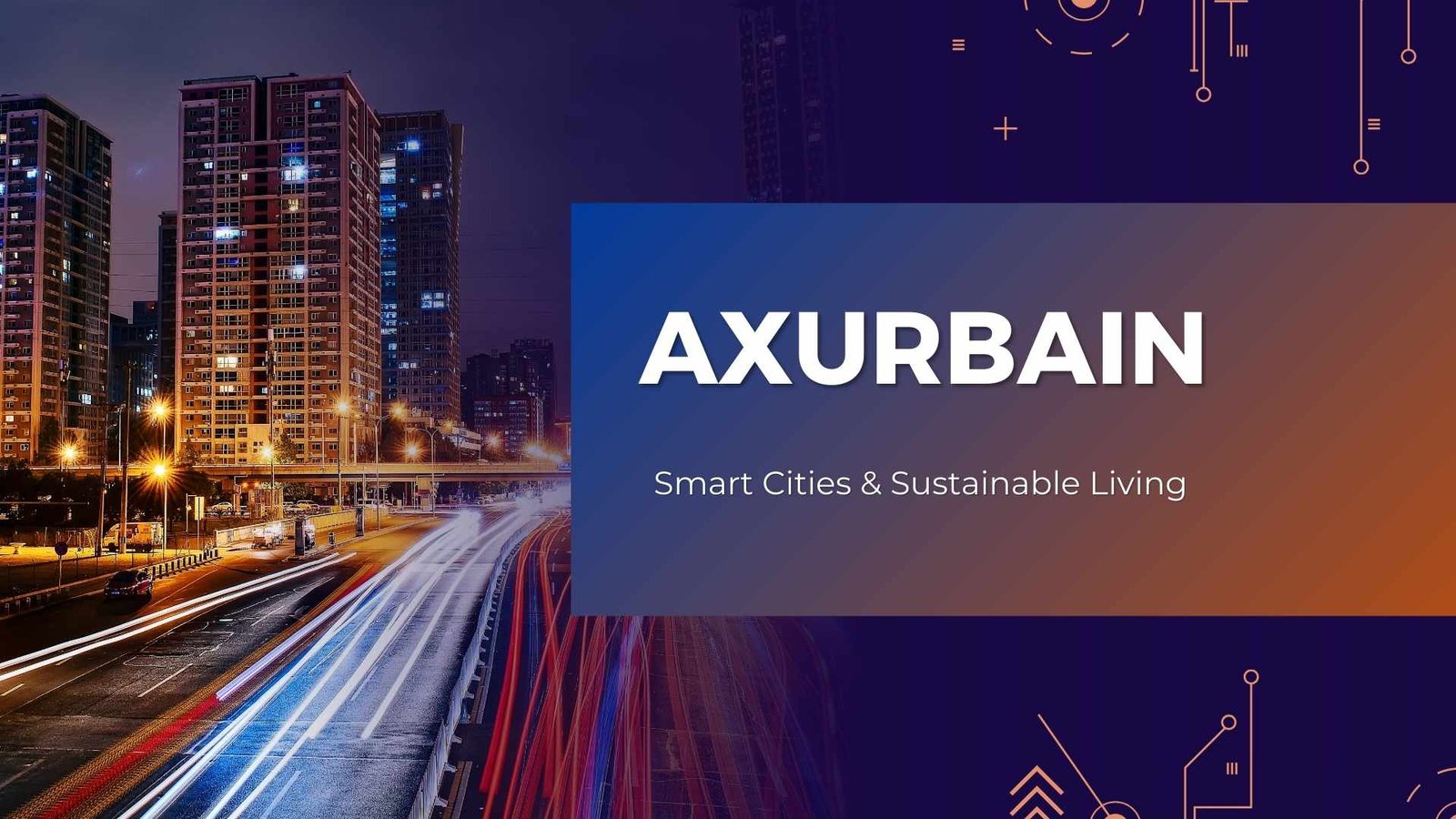
Axurbain – Smart Cities & Sustainable Living
Urban development is entering a transformative phase where sustainability, digital innovation, and human-centered planning intersect. Cities are no longer expanding solely through physical construction; they are evolving through intelligent systems that manage energy, mobility, water, housing, and public services in an integrated manner. Axurbain explores this transition by examining how modern urban environments are becoming adaptive ecosystems designed for long-term resilience and improved quality of life.
Rapid urbanization continues to reshape economic and environmental landscapes worldwide. With growing population density and increasing resource demands, cities must adopt strategic frameworks that promote efficiency without compromising livability. Through research-driven insights into infrastructure modernization, climate-responsive architecture, and data-driven governance, Axurbain highlights how cities can balance growth with sustainability. Urban transformation today is defined not only by skyline expansion but by systemic intelligence and responsible design.
Smart Infrastructure and Digital Urban Systems
Real-Time Monitoring and Connected Networks
Modern urban systems rely on interconnected digital networks that collect and interpret real-time data. Sensors embedded in roads, utilities, and public facilities provide continuous information about traffic flow, electricity demand, water pressure, and air quality. Axurbain emphasizes that these connected networks enhance service reliability by enabling predictive maintenance and rapid response to disruptions. By analyzing performance metrics continuously, cities can reduce inefficiencies and prevent infrastructure failures before they occur.
Artificial Intelligence and Predictive Planning
Artificial intelligence strengthens urban planning through advanced data modeling and scenario simulation. Machine learning tools process complex datasets to forecast housing demand, transportation needs, and environmental risks. Axurbain examines how predictive analytics improves land-use decisions and optimizes public investment strategies. Instead of relying on historical assumptions, planners can use forward-looking insights to design infrastructure that remains functional for decades.
Digital Governance and Public Transparency
E-governance platforms provide citizens with digital access to permits, services, and policy updates. Transparent data-sharing builds public trust while encouraging civic participation. Axurbain highlights how digital governance enhances accountability and streamlines administrative processes. When residents can interact directly with planning systems, cities foster stronger community engagement and inclusive development.
Urban Cybersecurity and Digital Resilience
As digital systems expand, safeguarding them becomes essential. Urban cybersecurity strategies protect energy grids, communication networks, and transportation systems from cyber threats. Axurbain underscores the importance of resilient digital architecture that prevents service interruptions and protects sensitive information. Secure infrastructure ensures continuity in an increasingly technology-dependent urban environment.
Sustainable Architecture and Environmental Performance
Climate-Responsive Building Design
Climate-responsive architecture minimizes environmental impact through passive design strategies. Building orientation, shading devices, and thermal insulation reduce energy demand while enhancing indoor comfort. Axurbain explains how adaptive façades and natural ventilation systems contribute to sustainable performance without sacrificing functionality. Energy-efficient structures not only lower emissions but also reduce operational costs over time.
Renewable Energy and Distributed Power Systems
The integration of renewable energy sources into urban infrastructure is central to decarbonization efforts. Solar installations, wind turbines, and district-level microgrids create distributed energy networks that enhance reliability. Axurbain explores how decentralized systems reduce dependence on fossil fuels and strengthen grid resilience. Renewable adoption supports long-term climate goals while promoting energy independence.
Water Conservation and Urban Hydrology
Sustainable cities prioritize efficient water management through rainwater harvesting, greywater recycling, and advanced filtration technologies. Permeable pavements and green corridors improve stormwater absorption, reducing flood risks. Axurbain analyzes how integrated water systems protect urban ecosystems while ensuring long-term resource availability. Effective hydrological planning is essential for climate adaptation.
Low-Carbon Materials and Indoor Health
Sustainable construction materials reduce embodied carbon and environmental degradation. Cross-laminated timber, recycled steel, and low-emission finishes contribute to eco-friendly building practices. Axurbain highlights the connection between sustainable materials and improved indoor air quality. Health-focused design enhances productivity and overall well-being within urban environments.
Urban Mobility and Integrated Transportation Planning
Public Transit Optimization
Efficient public transportation networks reduce traffic congestion and environmental pollution. Electrified buses, expanded metro systems, and transit-oriented development improve connectivity across districts. Axurbain emphasizes the importance of coordinated transit planning that aligns with population growth and economic activity. Reliable public transport increases accessibility and social equity.
Intelligent Traffic Management Systems
AI-powered traffic monitoring adjusts signal timings based on live congestion patterns. Predictive routing technologies minimize delays and reduce fuel consumption. Axurbain explains how intelligent traffic systems improve road safety while enhancing environmental efficiency. Data-driven transport management transforms urban mobility into a responsive network.
Electric and Autonomous Vehicles
The transition toward electric vehicles reduces urban air pollution and greenhouse gas emissions. Charging infrastructure expansion supports sustainable transport adoption. Axurbain explores the role of autonomous vehicle systems in optimizing logistics and improving safety standards. Future mobility ecosystems combine electrification with digital intelligence.
Shared Mobility and Active Transport
Bike-sharing platforms, pedestrian-friendly streets, and micro-mobility options promote healthier commuting habits. Shared transport reduces vehicle ownership rates and lowers infrastructure strain. Axurbain demonstrates how active transport contributes to environmental sustainability and improved public health outcomes.
Urban Planning, Adaptive Reuse, and Community Development
Mixed-Use Zoning and Density Balance
Strategic land-use planning integrates residential, commercial, and recreational spaces within compact districts. Mixed-use zoning reduces commuting distances and enhances neighborhood vitality. Axurbain highlights how balanced density management fosters economic productivity without overwhelming infrastructure systems.
The 15-Minute City Framework
The 15-minute city concept prioritizes accessibility by ensuring essential services are within walking or cycling distance. Localized development reduces transportation emissions and strengthens community identity. Axurbain examines how decentralized planning enhances quality of life while promoting sustainable mobility patterns.
Adaptive Reuse and Urban Regeneration
Transforming underutilized buildings into functional spaces conserves resources and preserves cultural heritage. Adaptive reuse projects stimulate economic revival and minimize construction waste. Axurbain explores how regeneration strategies create vibrant districts that blend historical preservation with modern functionality.
Inclusive Planning and Social Infrastructure
Community participation strengthens urban development outcomes. Accessible housing, public spaces, and social services promote equity and cohesion. Axurbain underscores the importance of inclusive policies that address diverse demographic needs while fostering long-term stability.
Climate Resilience and Circular Urban Economies
Urban Heat Mitigation and Green Infrastructure
Green roofs, urban forests, and reflective building materials reduce heat retention in dense environments. These interventions lower cooling demand and enhance environmental comfort. Axurbain discusses how climate-adaptive design mitigates extreme temperature impacts.
Flood Prevention and Water Resilience
Retention basins, elevated construction, and advanced drainage systems protect cities from flooding. Climate-resilient infrastructure reduces economic losses during extreme weather events. Axurbain emphasizes proactive adaptation strategies for coastal and flood-prone regions.
Circular Economy and Waste Innovation
Sustainable waste systems prioritize recycling, composting, and resource recovery. Circular economy principles transform waste streams into reusable materials. Axurbain highlights how closed-loop systems minimize landfill dependency and conserve natural resources.
Carbon Neutrality and Long-Term Sustainability
Urban carbon neutrality requires coordinated policies across energy, transportation, and construction sectors. Renewable integration and emission reduction strategies align cities with global climate objectives. Axurbain evaluates how long-term sustainability planning ensures environmental balance and economic resilience.
Conclusion
The evolution of urban living reflects a global shift toward integrated, sustainable, and technology-enabled environments. Smart infrastructure, renewable energy systems, efficient mobility networks, adaptive reuse strategies, and climate resilience frameworks collectively define the blueprint of future cities. Axurbain provides analytical insight into these transformations, connecting innovation with responsible planning.
Urban progress depends on balancing economic growth with environmental stewardship and social equity. By combining digital intelligence, green design, and inclusive governance, cities can create resilient ecosystems that enhance quality of life while protecting natural resources. Through its exploration of sustainable development and smart urban systems, Axurbain contributes to a broader understanding of how modern cities can evolve responsibly and intelligently.